κεχαριτωμένη
Kecharitomene
keh-hah-ree-toh-MEH-nee
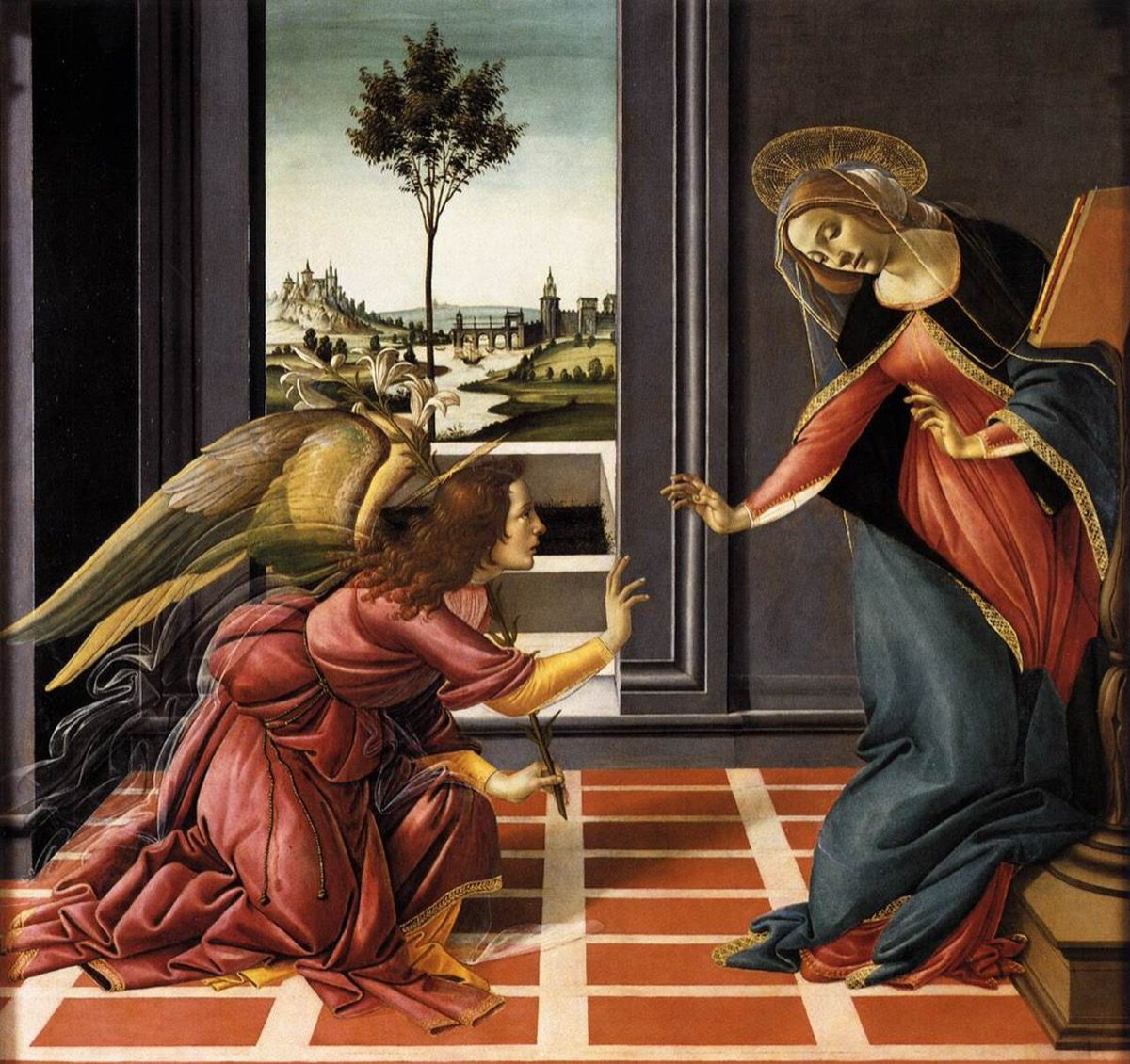
The one-word title the angel Gabriel gives Mary at the Annunciation — a perfect passive participle meaning she has been endowed with grace and remains so — a scriptural root of the Immaculate Conception.
“you who have been graced”; traditionally, “full of grace”
Gabriel does not call Mary by name. He says “Chaire, kecharitōmenē” — “Hail, full of grace” in the Church's traditional rendering. The word is a perfect passive participle of charitoō, “to bestow grace”: the perfect tense describes a completed action whose effect continues, so the sense is one who has been and remains graced. The Church has read this greeting as revealing that Mary was prepared by grace before the angel ever arrived. The Catechism cites it in teaching that she was “enriched by God with gifts appropriate to such a role,” redeemed from the moment of her conception, and that this fullness of grace was entirely God's gift.
Sources
Church teaching
- Ineffabilis Deus · Pius IXPius IX, apostolic constitution Ineffabilis Deus (8 December 1854), defining the Immaculate Conception; the text discusses the angelic greeting as evidence of Mary's singular fullness of grace.
Sources checked 29 September 2026